
Year 4
| Controlling Sounds through singing and playing (performing) | Creating and developing musical ideas (composing) | Listening and applying knowledge and understanding Responding and reviewing to Music (Listening and appraising) |
|---|---|---|
| 4p1. Sing in tune, breathe well, pronounce words, change pitch and dynamics. | 4c1. Compose and perform melodies using three or four notes. | 4l1. Know how pulse stays the same but rhythm changes in a piece of music. |
| 4p2. Sustain a rhythmic ostinato/drone/melodic ostinato (riff) (to accompany singing) on a instrument (tempo/duration/texture). | 4c2. Create accompaniments for tunes using drones or melodic ostinati (riffs). | 4l2. Use more musical dimensions vocabulary to describe music - duration, timbre, pitch, dynamics, tempo, texture, structure, rhythm, metre, riff, ostinato, melody, harmony. |
| 4p3. Perform with control and awareness of what others are singing/playing. | 4c3. Create (dotted) rhythmic patterns with awareness of timbre and duration. | 4l3. Identify cyclic patterns. |
| 4p4. Combine sounds expressively (all dimensions). | 4c4. Make creative use of the way sounds can be changed, organised and controlled (including ICT). | 4l4. Know that sense of occasion affects performance. |
| 4p5. Read notes and know how many beats they represent (minim, crotchet, semibreve, quaver, dotted crotchet, rests). | 4l5. Listen to several layers of sound (texture) and talk about the effect on mod and feelings. | |
| 4p6. Improvise within a group using more than 2 notes. |
Examples of the skills shown in Year 4
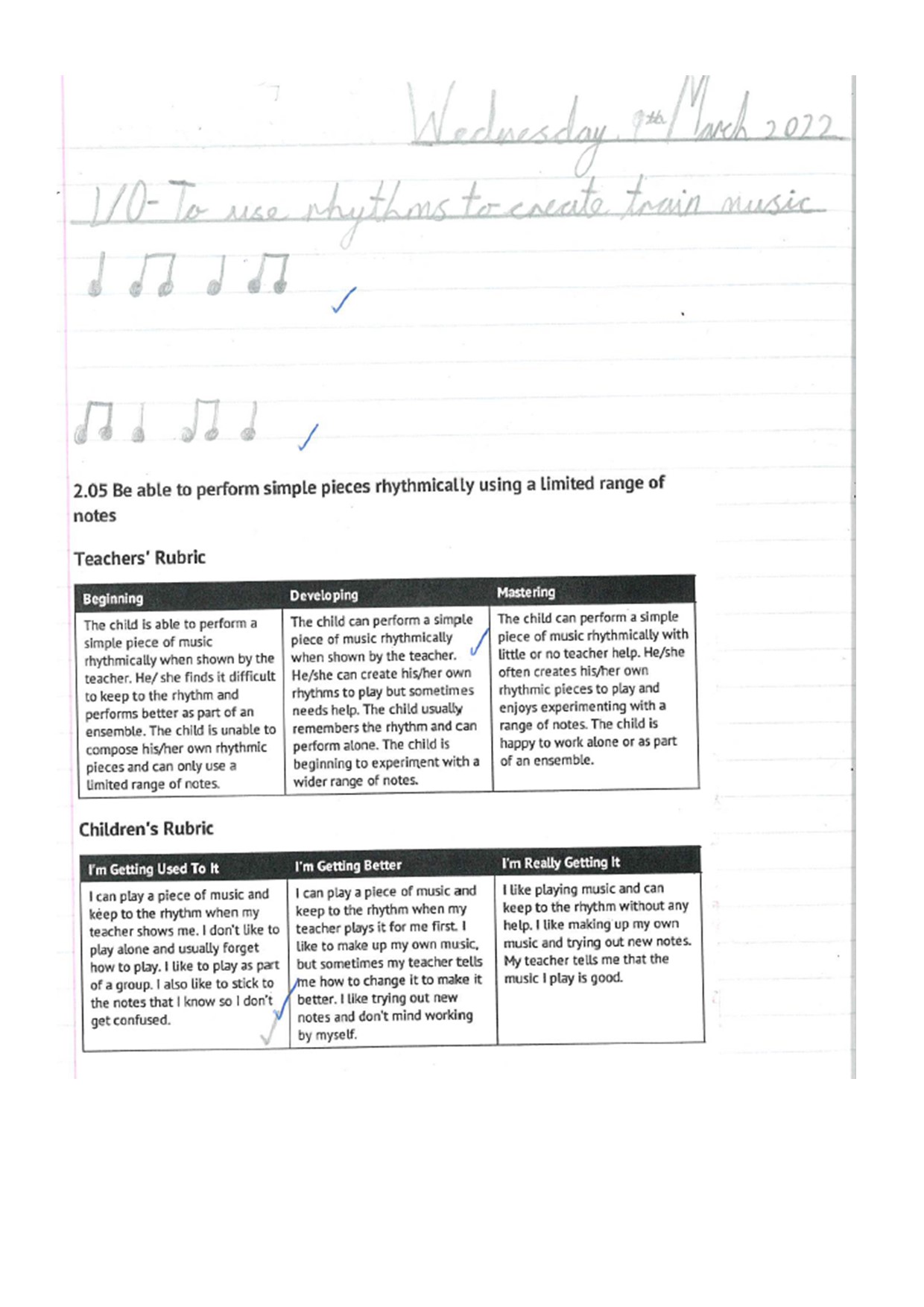
4c1. Compose and perform melodies using three or four notes.
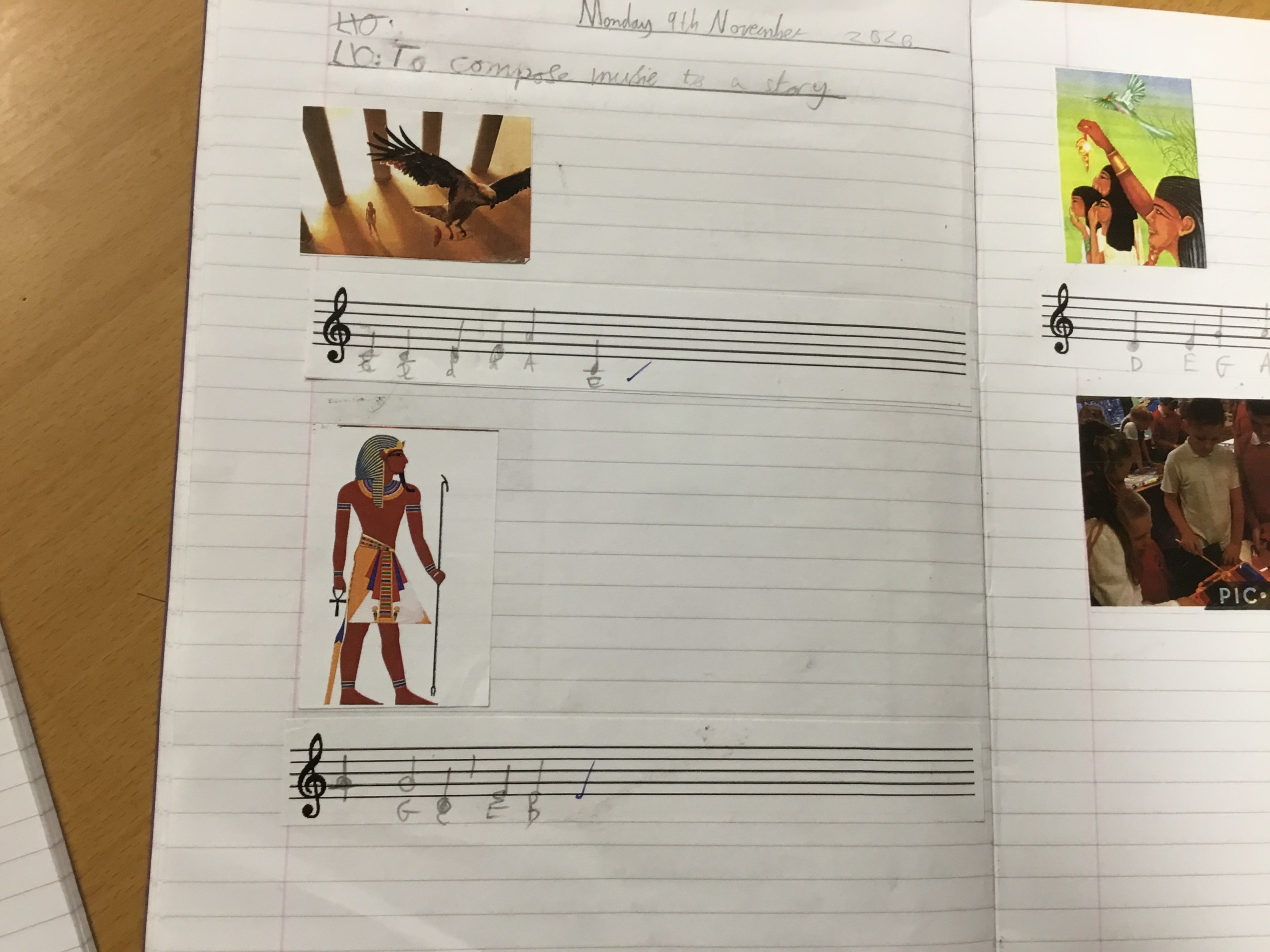
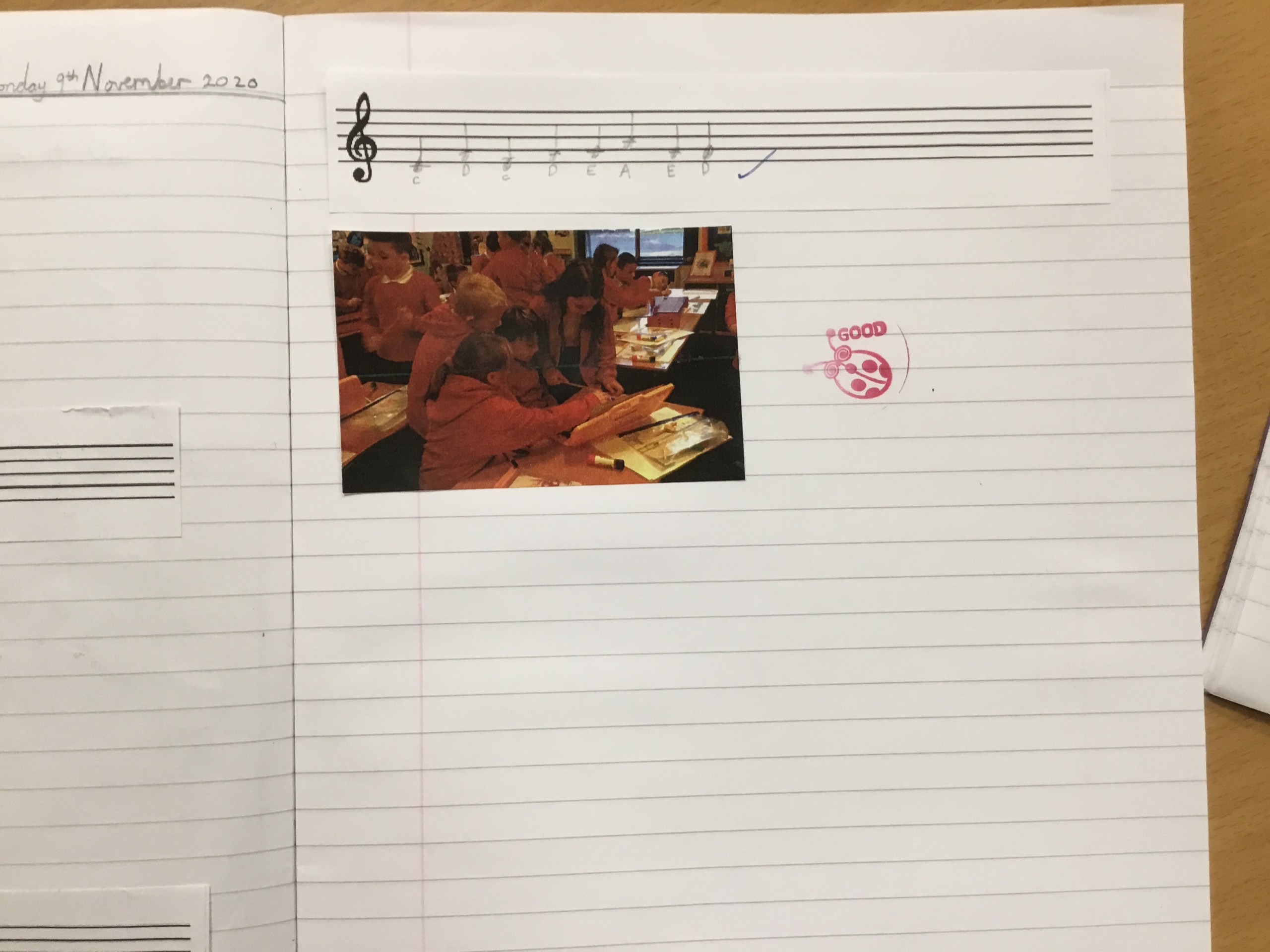
4c1. Compose and perform melodies using three or four notes.
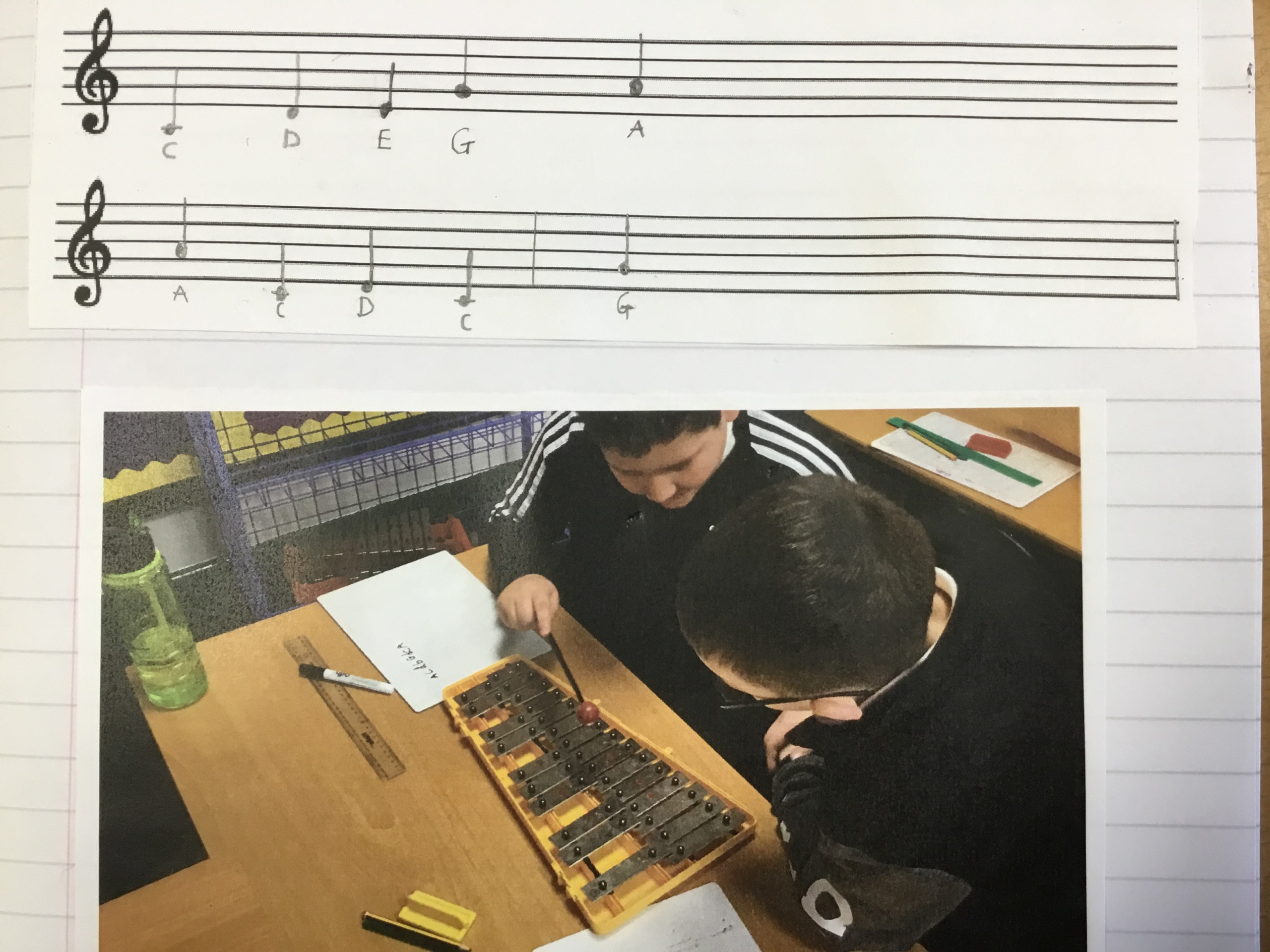
4p3. Perform with control and awareness of what others are singing/playing.
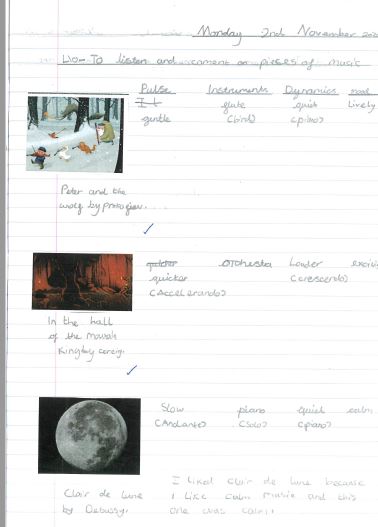
4l2. Use more musical dimensions vocabulary to describe music – duration, timbre, pitch, dynamics, tempo, texture, structure, rhythm, metre, riff, ostinato, melody, harmony.
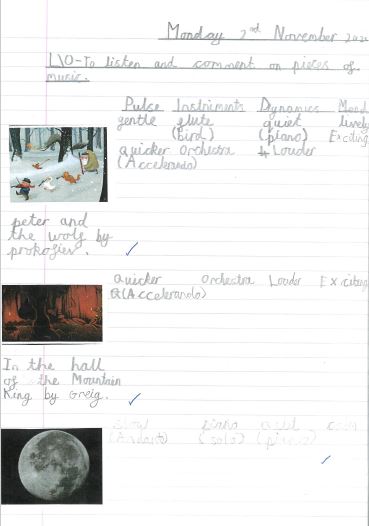
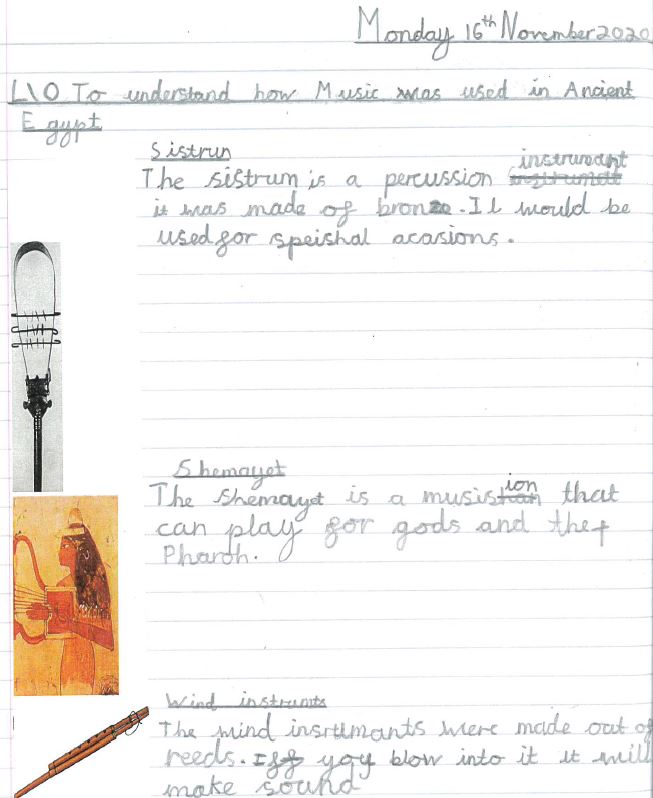
4l7. Describe different purposes of music in history/other cultures.
4c1. Compose and perform melodies using three or four notes.
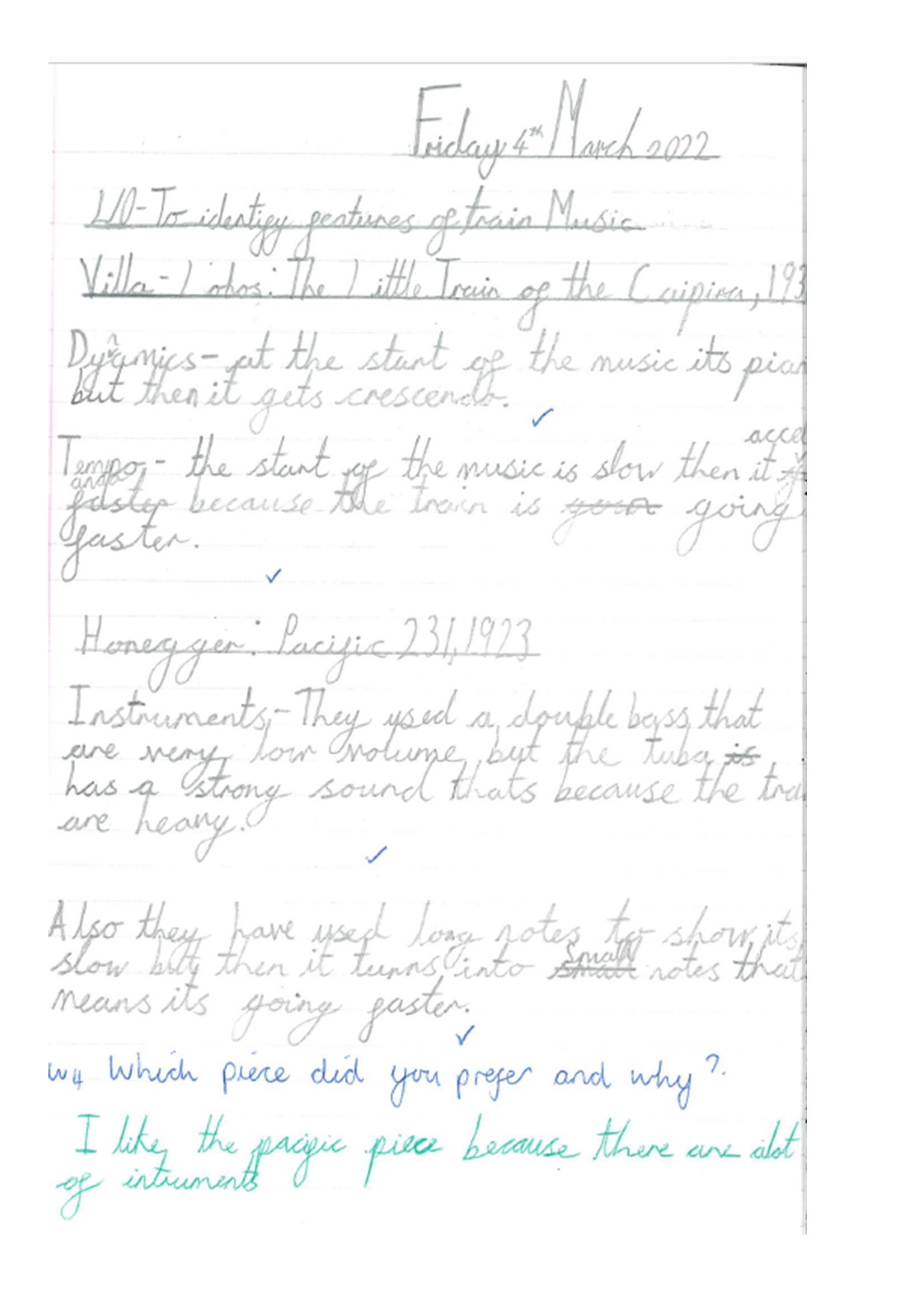
4c2. Create accompaniments for tunes using drones or melodic ostinati (riffs).
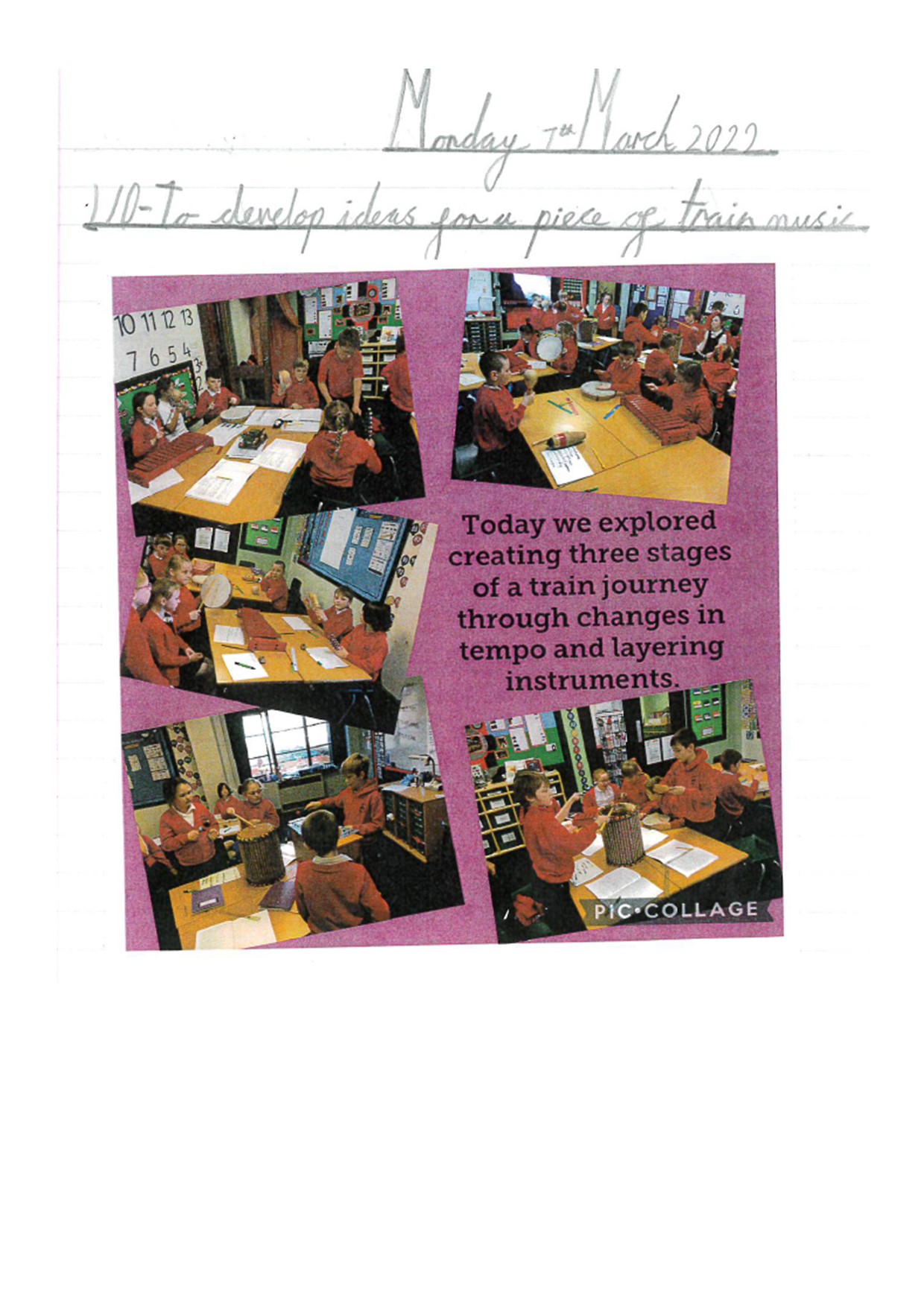
4c1. Compose and perform melodies using three or four notes.
4c2. Create accompaniments for tunes using drones or melodic ostinati (riffs).
“The choice to do a traditional nativity was great !.“
“Teachers, including those who are new to teaching, have high expectations, and they plan creative lessons that spark pupils’ interest and inspire them to do well.”
“School leaders are ambitious and highly knowledgeable about teaching and learning.”
“When ever I have had a problem the staff on the whole have been sympathetic and helpful.“
“The best thing about this school, when I ask my child this question, he said Mrs Emmerson. “
“The bike loan scheme.My family also like the school bank.“
“The joy of the teachers who greet the children and parents daily.“
“Leaders use funding well to ensure that pupils with special educational needs and/or disabilities (SEND) make strong progress from their different starting points.”
“The Head teacher and deputy are fab, they join in everything.”
“I feel the school has advanced with regards to the appropriate curriculum for different age groups.“
“The teaching of phonics is a strength and enables pupils to make rapid improvement in their early literacy skills. ”
“I love the fact that senior members of staff know the names of the children.“
“Senior leaders lead by example, modelling what is expected of all staff. Teachers feel valued and respected.”
“The after school activities, film nights and discos.“
History day was amazing. Brilliant idea.
“My kids love the fruit on the snack table.“
“The stimulating learning environment. “
“This school meets our expectations in every way.“
“My son’s teacher is creative, enthusiastic and genuinely cares about him as an individual .“
“the school gives me advice as a parent so I can help my daughter.“
“Opening the school doors at 8.40am has made it much easier as it is less crowded.“
“..closeness between all age groups and years.“
“Children get off to a strong start in early years. This is due to effective leadership and skilful teaching. The proportion of children reaching a good level of development is improving yearon-year.”
“Open weeks in Foundation allows parents to enjoy school as much as our children.“
“Senior leaders lead by example, modelling what is expected of all staff. Teachers feel valued and respected.”
“Leaders and staff have significantly improved the teaching of reading. Pupils are enthusiastic and frequent readers.”
“We can only applaud the ingenuity & continued compassion of the young people at Boothferry.”
“We want to thank you for welcoming my family when we moved here (from Bulgaria).”
“Miss Pulleyn is fantastic“
“The curriculum is well designed to include a range of exciting themes, visits and visitors to enhance pupils’ learning. Pupils become
confident individuals who are well prepared for the next stage of their education.”
“Pupils’ personal development and welfare are outstanding. Pupils thrive and are keen to learn. They know how to look after their
wellbeing and how to keep safe. The school is an inclusive and happy place.”
“The headteacher, deputy headteacher and the assistant headteacher make an effective team. They sustain a culture of continuous i improvement through the school’s vision and specific learning goals, which include resilience, morality and adaptability.”
“My children are developing very well in school.“
“the amount of effort put in by the teachers to make topics interesting is brilliant.“
“Thank you for treating my child like your own.“
“School leaders have taken effective action to ensure that pupils make at least good progress from their low starting points in reading,
writing and mathematics in all year groups.”
“I love seeing school events on Twitter.“
“The headteacher, senior leaders and governors are ambitious for pupils. Their determination has made Boothferry Primary a flourishing and successful school.”
“The photography club is brilliant, I think introducing things like this is brilliant for the children.“
“You can approach any member of staff and they help you.“
“My children have come on and made progress socially and academically since joining.“
Boothferry at Young Voices…..Just WOW! What an experience.”
“Pupils who speak English as an additional language make rapid progress. Disadvantaged pupils are also supported well to make good,
and sometimes better, progress in reading, writing and mathematics.”
“Being part of their learning – it doesn’t just stay in the classroom.”
“The friendly atmosphere, the safe environment & the teachers’ encouragement.”
“My children are thriving as the school is committed to learning and progression.“