Religious Education
In Key Stage One children are taught about Christianity and Hinduism. In Key Stage Two children are taught about Christianity, Hinduism and Islam. To develop our children’s awareness and respect towards other world religions we have focus weeks throughout the year. This work showcases an exemplar of work produced around the Jewish festival of Passover.
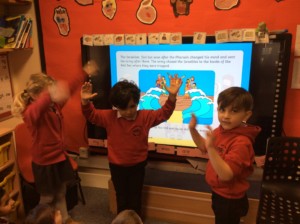
EYFS listened to the story of Moses, before acting it out to support their understanding of the story.
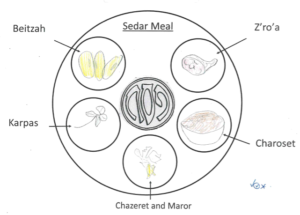
Year 1 created their own Sedar meals, matching the pictures to the name of each part of the meal.
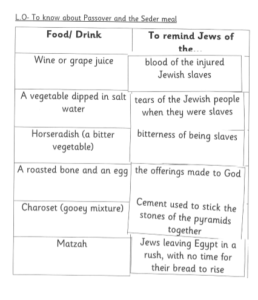
Year 2 explored what each part of the Sedar meal represented.
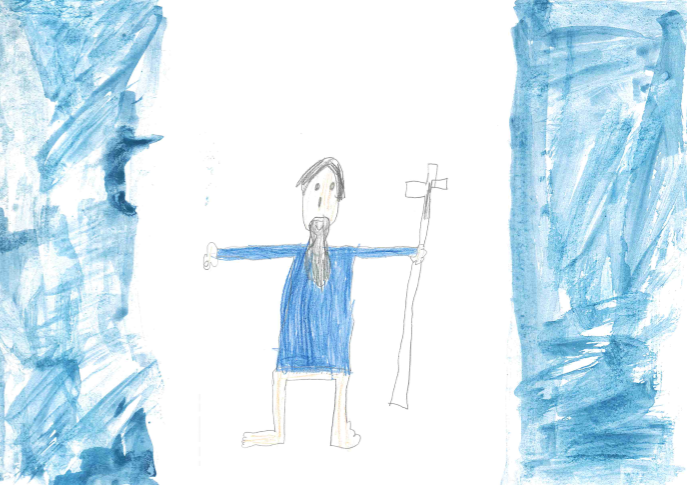
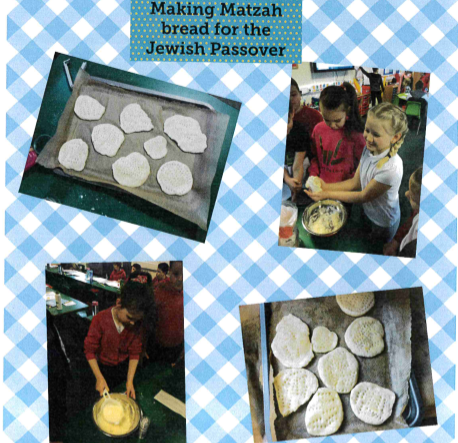
Year 3 made matzah bread and tasted it. They then created a piece of art, showcasing Moses parting the water.
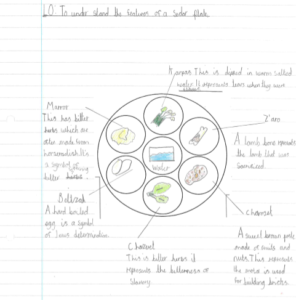
Year 4 researched the different parts of the Sedar plate and compared them to each other.
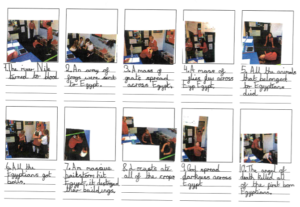
Year 5 explored reasons why Passover is celebrated. They looked at the ten plagues of Egypt and acted them out.
Year 6 watched a video about a family preparing for Passover, before discussing what makes the story of Moses worth remembering. They then looked at who needs freedom in today’s world.
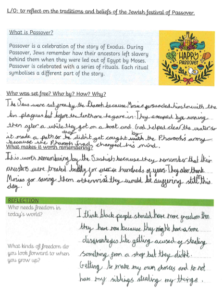
The following pieces of work show the progression of learning in RE surrounding the area of belonging from Year 1 through to Year 6
Year 1
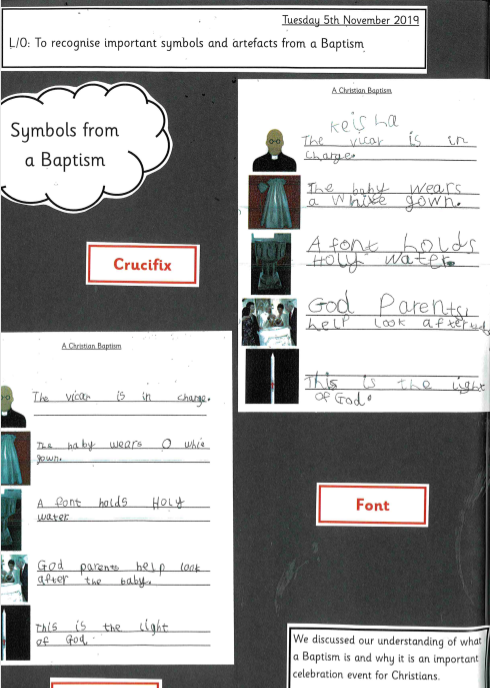
In Year 1, we recognise the symbols used in a Christian Baptism.
Year 2
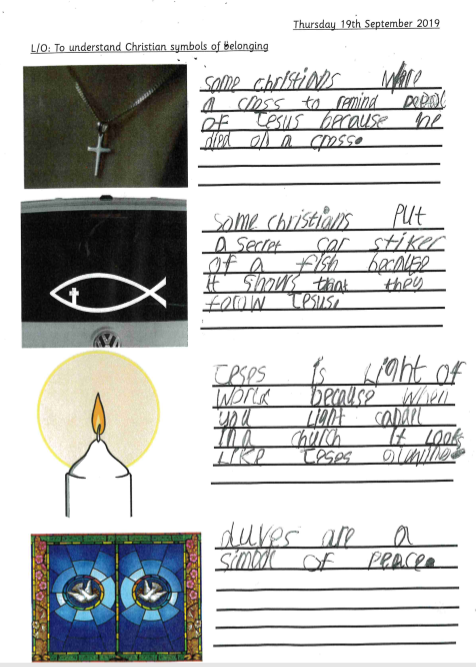
In Year 2, this progresses to learning about Christian symbols and providing an explanation of what these symbols represent.
Year 3
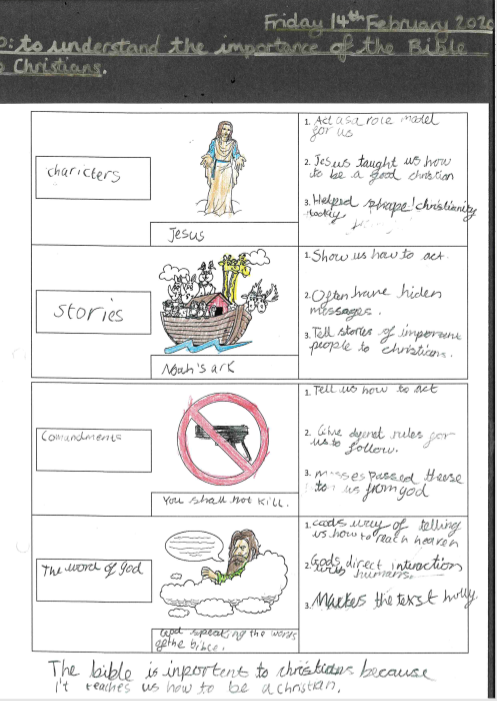
In Year 3, we learn more in depth about Christian artefacts. We learn about the features of some of these artefacts, such as the Bible, and why these are important to Christians.
Year 4
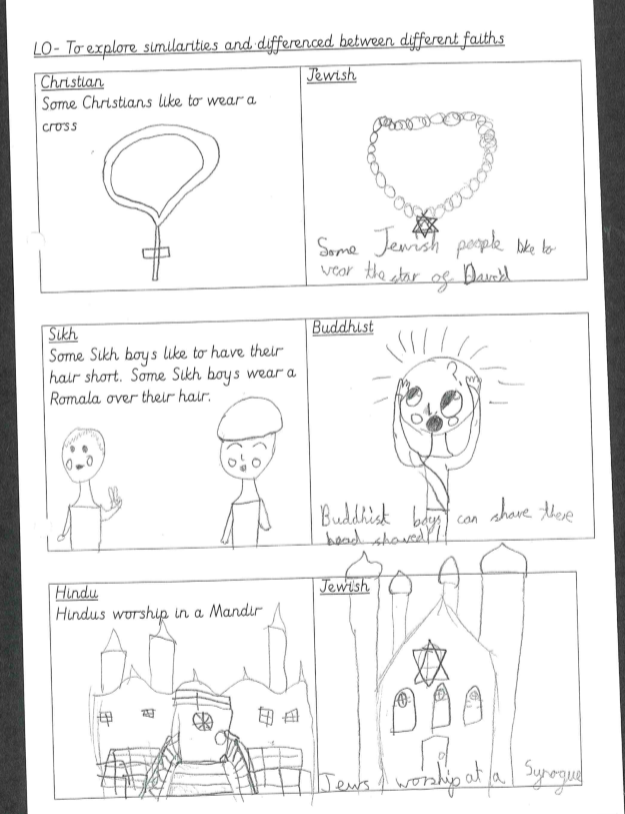
In Year 4, we make comparisons between 2 religions, looking at both similarities and differences.
Year 5
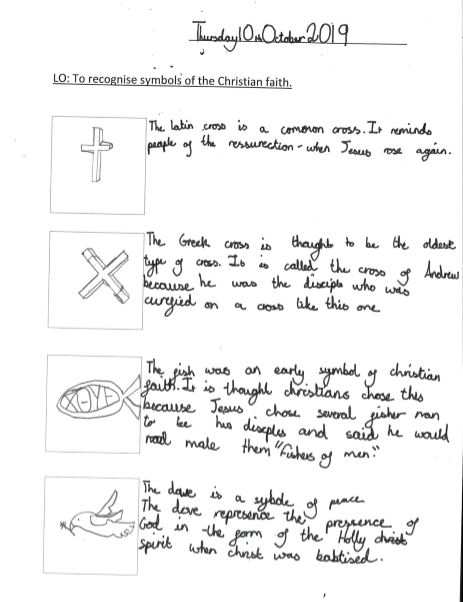
In Year 5, we develop our knowledge of symbols further by providing deeper explanations as to what the symbols represent and why they are important to Christians.
Year 6
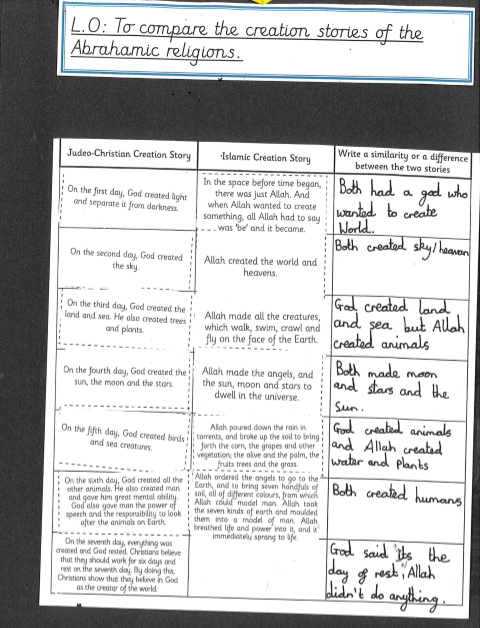
In Year 6, we make greater comparisons between religions, stating the similarities and differences between stories with the same theme.
“The joy of the teachers who greet the children and parents daily.“
“My children are thriving as the school is committed to learning and progression.“
“We want to thank you for welcoming my family when we moved here (from Bulgaria).”
“We can only applaud the ingenuity & continued compassion of the young people at Boothferry.”
“Thank you for treating my child like your own.“
“The teaching of phonics is a strength and enables pupils to make rapid improvement in their early literacy skills. ”
“Being part of their learning – it doesn’t just stay in the classroom.”
“My children are developing very well in school.“
“The curriculum is well designed to include a range of exciting themes, visits and visitors to enhance pupils’ learning. Pupils become
confident individuals who are well prepared for the next stage of their education.”
“Open weeks in Foundation allows parents to enjoy school as much as our children.“
“Pupils who speak English as an additional language make rapid progress. Disadvantaged pupils are also supported well to make good,
and sometimes better, progress in reading, writing and mathematics.”
“The after school activities, film nights and discos.“
“Leaders and staff have significantly improved the teaching of reading. Pupils are enthusiastic and frequent readers.”
“The bike loan scheme.My family also like the school bank.“
Boothferry at Young Voices…..Just WOW! What an experience.”
“You can approach any member of staff and they help you.“
“Leaders use funding well to ensure that pupils with special educational needs and/or disabilities (SEND) make strong progress from their different starting points.”
“I love seeing school events on Twitter.“
“School leaders have taken effective action to ensure that pupils make at least good progress from their low starting points in reading,
writing and mathematics in all year groups.”
“The choice to do a traditional nativity was great !.“
“I love the fact that senior members of staff know the names of the children.“
“My son’s teacher is creative, enthusiastic and genuinely cares about him as an individual .“
“..closeness between all age groups and years.“
“When ever I have had a problem the staff on the whole have been sympathetic and helpful.“
“Senior leaders lead by example, modelling what is expected of all staff. Teachers feel valued and respected.”
History day was amazing. Brilliant idea.
“Senior leaders lead by example, modelling what is expected of all staff. Teachers feel valued and respected.”
“Pupils’ personal development and welfare are outstanding. Pupils thrive and are keen to learn. They know how to look after their
wellbeing and how to keep safe. The school is an inclusive and happy place.”
“The Head teacher and deputy are fab, they join in everything.”
“the amount of effort put in by the teachers to make topics interesting is brilliant.“
“The headteacher, deputy headteacher and the assistant headteacher make an effective team. They sustain a culture of continuous i improvement through the school’s vision and specific learning goals, which include resilience, morality and adaptability.”
“Opening the school doors at 8.40am has made it much easier as it is less crowded.“
“The headteacher, senior leaders and governors are ambitious for pupils. Their determination has made Boothferry Primary a flourishing and successful school.”
“This school meets our expectations in every way.“
“the school gives me advice as a parent so I can help my daughter.“
“Children get off to a strong start in early years. This is due to effective leadership and skilful teaching. The proportion of children reaching a good level of development is improving yearon-year.”
“The stimulating learning environment. “
“My children have come on and made progress socially and academically since joining.“
“Teachers, including those who are new to teaching, have high expectations, and they plan creative lessons that spark pupils’ interest and inspire them to do well.”
“The friendly atmosphere, the safe environment & the teachers’ encouragement.”
“My kids love the fruit on the snack table.“
“The photography club is brilliant, I think introducing things like this is brilliant for the children.“
“Miss Pulleyn is fantastic“
“School leaders are ambitious and highly knowledgeable about teaching and learning.”
“I feel the school has advanced with regards to the appropriate curriculum for different age groups.“
“The best thing about this school, when I ask my child this question, he said Mrs Emmerson. “